
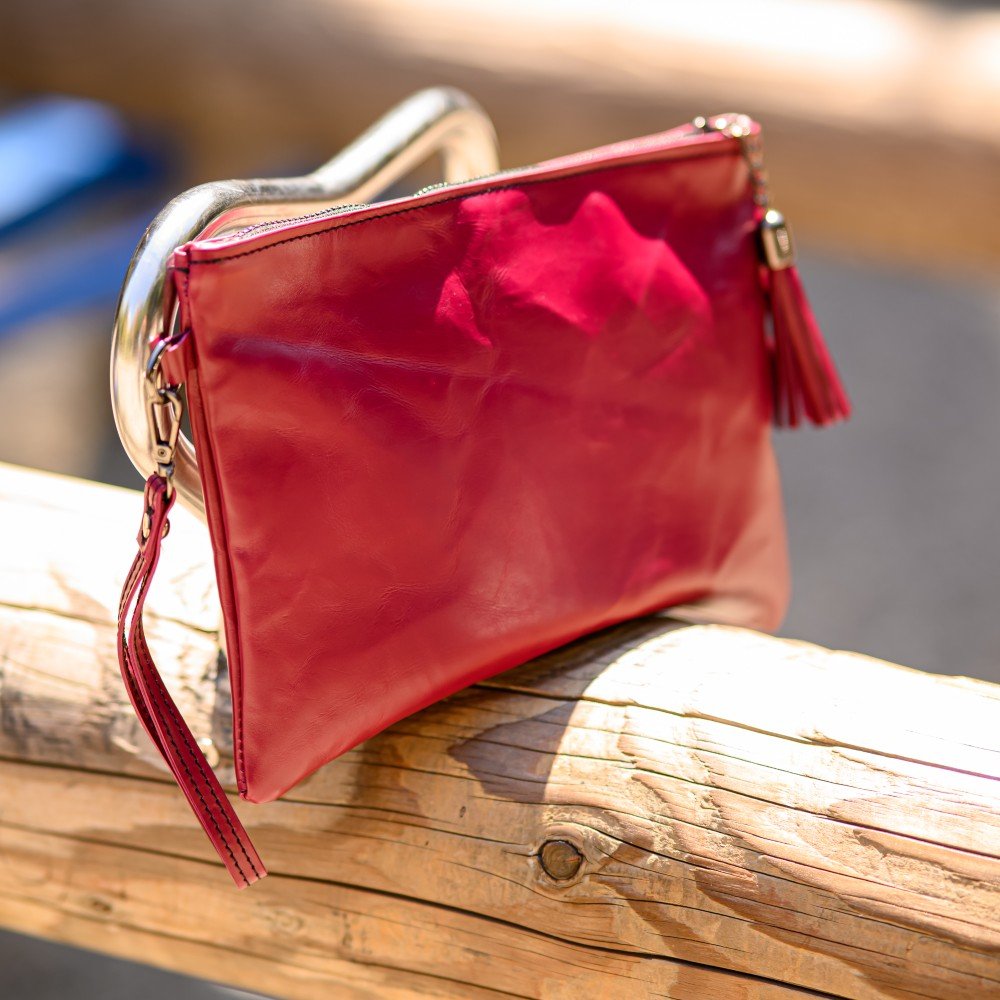
The creation of a handmade leather bag does not begin with a machine. It begins with a thought. With something I saw and liked. With an image, a detail, or a need that is not fulfilled exactly the way I would like. That’s where the first question is born: Can this become a bag? And if so, what size will it be? Will it be a leather clutch? Will it be worn crossbody? Will it have a chain?
This initial idea is the most important stage in the creation of a handmade leather bag. Because before the leather is selected, before the first piece is cut, before anything is stitched, its character has already been decided. Handmade craftsmanship is not just a technical process. It is a journey of choices.
From Design to Pattern – The First Step in Leather Bag Construction
When the idea begins to take shape, it is translated into a pattern. The first pattern is made from cardboard. We do not cut premium leather right away. First, we test.
The pattern is tested on old leather pieces or on materials not intended for final use. This is where we see whether the design works, whether the proportions are balanced, and whether the size is practical. Very often, adjustments are made. An angle changes, a flap becomes smaller, a joining point is repositioned.
Sometimes a design is rejected entirely. It does not move forward. And that is part of the process. Handmade creation does not mean everything works perfectly the first time. It means choosing to keep only what truly deserves to become a finished product.
Choosing Genuine Leather – A Defining Factor of Quality
Selecting the leather is perhaps the most critical stage in creating a handmade leather bag. Not all leathers are the same. They differ in texture, thickness, behavior, and durability.
Calf leather is primarily used, offering strength and timeless appeal. Some leathers are softer and more flexible, ideal for leather clutches and more modern designs. Others are firmer and more structured, suitable for bags that require shape and stability.
For example, leather used for belts is noticeably thicker and tougher to withstand constant use and long-term friction.
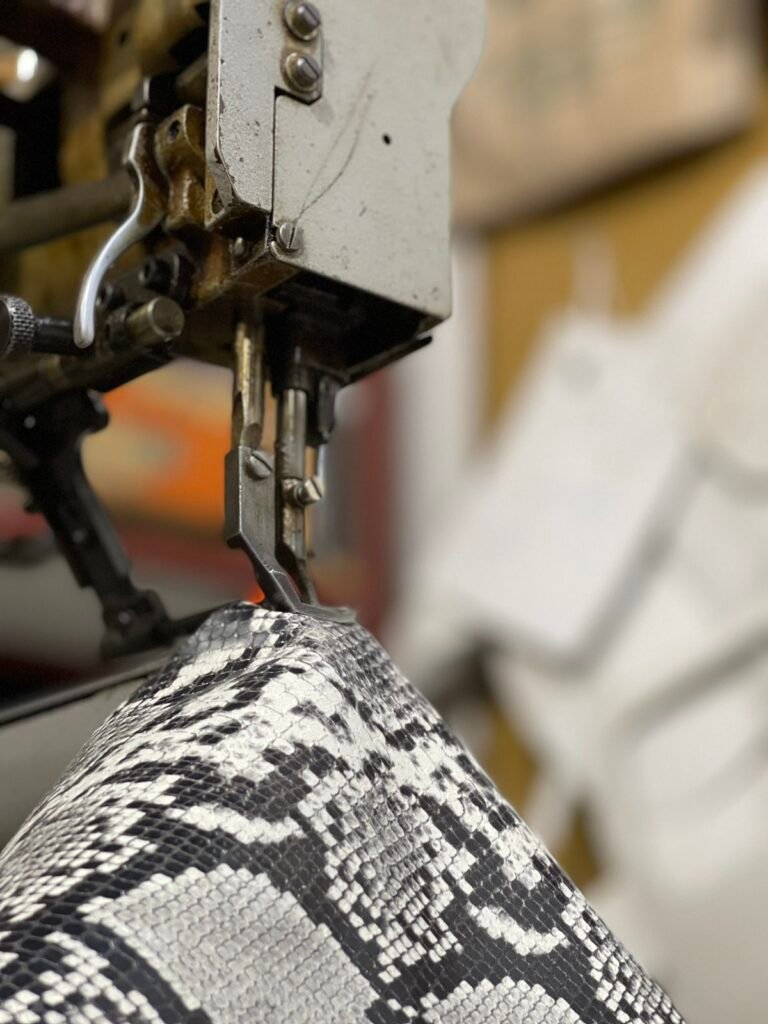
There are also leathers with distinctive textures, finishes, or embossed patterns, as well as clean, timeless surfaces. Each design calls for its own leather. You cannot use just any material with any pattern and expect the same result.
Sometimes a leather is selected but ultimately not used. In practice, it may not deliver the result I envisioned. In that case, it is rejected. Quality is not only about the material — it is also about the decision not to compromise.
The Crafting Process Inside Our Family Workshop in Heraklion, Crete
Once the pattern is approved and the leather selected, the construction of the leather bag truly begins. The leather is cut either with a specialized strip-cutting knife or manually with a cutter, depending on the design and the needs of each piece. The parts are assembled and gradually begin to take shape.
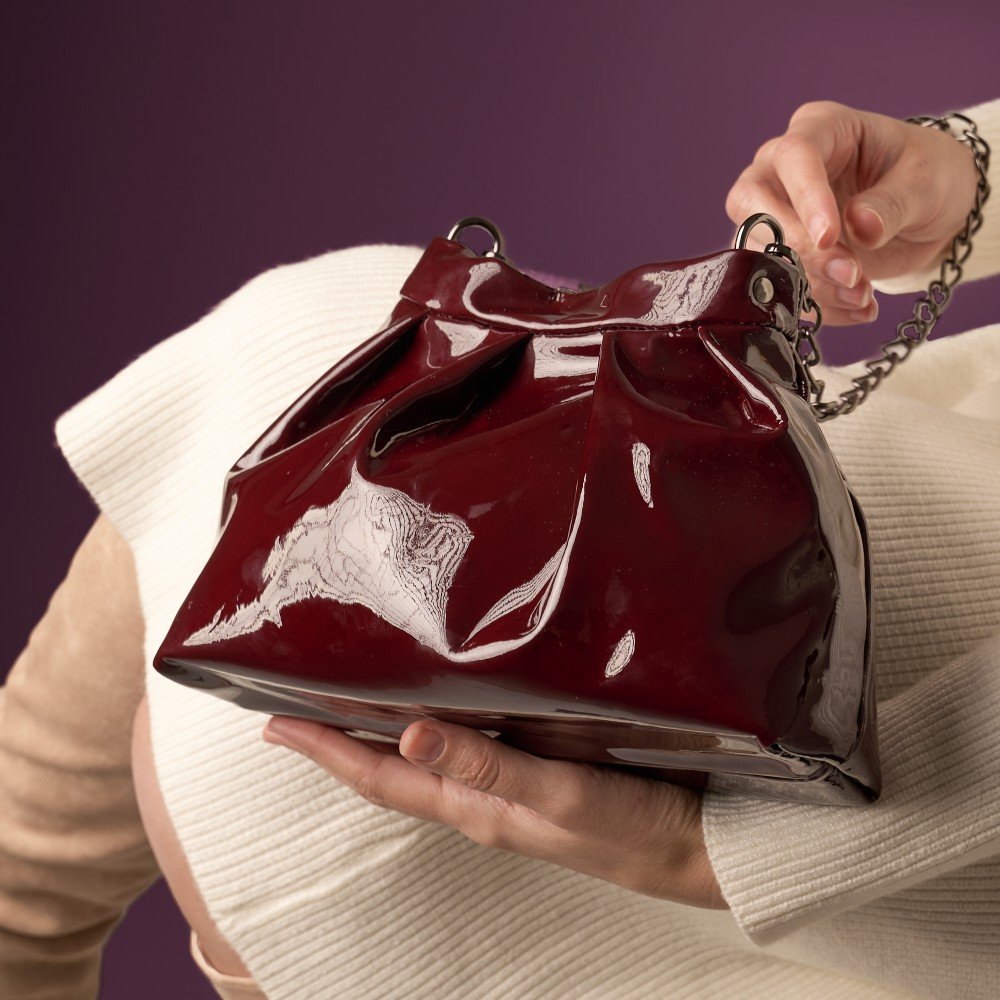
Next comes the placement of metal elements, chains, handles, or other details. Every stage requires attention. A small mistake in cutting or placement can affect the final result.
For a simple leather clutch, once the pattern is ready and tested, the construction may take approximately one hour. For more complex designs, the time increases significantly.
Production takes place in our family leather goods workshop in Heraklion, Crete. I focus on design and the more modern pieces, while my parents and siblings handle construction and other products.
In our workshop, we also create men’s and women’s leather bags, leather wallets, belts, and other leather accessories. Additionally, our collection includes leather sandals from a local Cretan workshop, selected with the same standards of quality and authenticity.
Mass Production or Handmade Leather Bag?
Today, many leather bags are mass-produced. The same design is repeated in hundreds or thousands of identical pieces.
In contrast, a handmade leather bag follows a different path. Some leathers are available only in limited quantities. This means certain designs are produced in very small numbers and may never be made again.
Other leathers may return, but often with slight color variations — something completely natural in genuine leather.
This gives each piece a slightly different personality. And that is something mass production can never offer.
Why Choose a Handmade Leather Bag?
Choosing a handmade leather bag is not only about aesthetics.
It is about:
- The quality of genuine leather
- Long-term durability
- Timeless design
- Knowing who made it and where
A well-crafted leather bag can be used for many years. Over time, the leather develops character, softens, and adapts to use. It does not simply wear out — it evolves.
And perhaps that is the essence of handmade creation: you are not simply buying a product. You are choosing an object that has gone through a process of testing, decisions, and personal involvement.
Frequently Asked Questions About Handmade Leather Bags
How long does it take to make a handmade leather bag?
The construction time depends on the design. A simple leather clutch can be completed in approximately one hour, while more complex designs require more time and detailed work.
Are all handmade leather bags the same?
No. Even when a design is repeated, natural leather may show slight variations in texture and shade. This is a characteristic of genuine leather and a mark of authenticity.
The Essence of Handmade Creation
Creating a handmade leather bag is a process that combines idea, technical knowledge, and careful material selection. It is not always easy. There are trials that fail, leathers that are ultimately not used, and designs that do not move forward.
But the pieces that reach the final stage have passed through a filter — through thought, rejection, and conscious selection.
And that is what gives value to the final piece.

